
Spider Veins | Metairie & New Orleans, LA
Understanding
Spider Veins.
Small, visible veins can raise questions. Learn what spider veins are, what can contribute to them, and how Gitter Vein Institute can help you explore your options.
Request an Appointment
What Are
Spider Veins?
Spider veins, also called telangiectasias, are small, thin blood vessels visible beneath the skin. They may appear red or blue and form fine lines, branching patterns, or web-like shapes.
They commonly appear on the legs or face. Some people want to address their appearance; others have symptoms they would like to discuss.
Your concerns and the location of the vessels help guide an evaluation and a conversation about treatment.
Why Do
Spider Veins Develop?
Heredity, pregnancy, and hormonal influences can contribute to spider veins. Some are associated with increased pressure in nearby veins or an underlying vein problem.
Larger reticular, or “feeder,” veins may connect to the smaller vessels visible at the surface. When these veins are involved, your physician may recommend addressing them as part of your treatment plan.
An evaluation helps distinguish appearance concerns from symptoms that may need further investigation.
Learn About Reticular Veins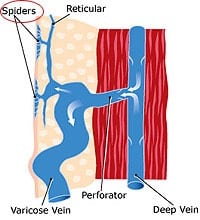
Spider veins are small surface vessels. Nearby feeder veins may also be considered when planning treatment.
Treatment Options.
Matched to Your Veins.
Gitter Vein Institute offers sclerotherapy injections and VeinGogh. The size and location of the vessels, your skin, and your goals help determine which option—or combination—may be appropriate.
01
Sclerotherapy
A liquid or foam solution is injected into an affected vein to cause it to close and gradually fade.
About sclerotherapy →02
VeinGogh
High-frequency energy delivered through a fine probe is used to treat small surface vessels.
Learn about VeinGogh →Take a Closer Look
at Your Options
Explore Spider Vein Treatment
Spider Veins:
Your Questions
No. Spider veins without symptoms are often an appearance concern, and treatment is a personal choice. They do not automatically mean you need a procedure on larger veins.
Tell your physician about pain, burning, or other symptoms so those concerns can be assessed separately.
Our practice almost always requires an ultrasound before treating spider veins, as asymptomatic pathology needs to be assessed first.
More than one session may be needed. The number and length of visits depend on the vessels being treated, the approach used, and your response.
Ask about the expected timeline, possible side effects, aftercare, and follow-up before deciding on treatment. Improvement develops over time, and new spider veins can appear later.
Small surface vessels and their feeder veins may need different approaches. Your physician may combine a treatment for the visible spider veins with sclerotherapy for associated reticular veins.
The plan should reflect your evaluation and goals rather than assume everyone needs the same combination.
Patient guidance: Venous society guidelines · Vein treatment information
Your Concerns.
Your Next Step.
Bring your questions about visible veins, symptoms, and treatment to Gitter Vein Institute. Discuss what you would like to address and learn which options fit your situation.
Request an Appointment