
Reticular Vein Treatment | Metairie & New Orleans, LA

Reticular Veins.
Understand Your Options.

Noticing blue or green veins beneath your skin? Gitter Vein Institute helps you explore treatment for reticular veins and the spider veins they may feed.

Request an Appointment
Visible networks of veins on the backs of the legs

What Are
Reticular Veins?

Reticular veins are dilated veins that appear as blue or green lines beneath the skin. They are sometimes called “feeder veins” because they can connect to smaller spider veins.

Some people seek care for their appearance. Others notice tenderness, burning, or itching in the legs. An evaluation can help determine whether these symptoms are related to a vein problem.

Discuss what you have noticed and what you would like treatment to address.

The Connection
to Spider Veins

Treating only the smallest visible veins may leave their feeding veins unaddressed. Your physician may recommend treating reticular veins before nearby spider veins as part of a coordinated plan.

The sequence depends on which veins are involved and your evaluation. Treatment cannot guarantee that new visible veins will never develop.

Explore Spider Vein Treatment
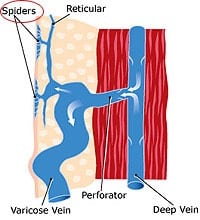
Diagram labeling spider, reticular, varicose, perforator, and deep veins

Reticular veins sit beneath the skin and may connect with smaller surface veins. An evaluation helps identify the veins to address.

Sclerotherapy.
A Plan for Your Veins.

The size and location of your veins, your symptoms, and your goals help guide the treatment discussion.

Sclerotherapy

A liquid or foam solution is injected into the affected vein to make it close and gradually fade. Sclerotherapy is a commonly used treatment for reticular veins.

Your physician selects the solution and approach for the vessels being treated.

Discuss Your Concerns.
Explore the Next Step.

Request an Appointment

Reticular Veins:
What to Know

They are related but different. Spider veins are finer vessels near the skin’s surface. Reticular veins are larger and often appear blue or green beneath the skin. Both can be present in the same area.

More than one sclerotherapy session may be needed, depending on the number and size of the veins being treated. Ask your physician about the expected number of visits and how progress will be assessed.

Sclerotherapy can cause skin discoloration, new fine vessels, or inflammation. Less common complications include skin injury, blood clots, and allergic reactions.

Review the benefits, risks, and alternatives with your physician before deciding on treatment.

Ask whether you will need compression stockings or dressings, when you can resume your usual activities, and when to return for follow-up. Follow the instructions provided for your procedure.

Learn more: Vein treatment patient information · Venous society guidelines

Start With
Your Questions

Whether your concern is visible veins or leg discomfort, bring your questions to Gitter Vein Institute. Discuss your symptoms, appearance goals, and treatment preferences so you can make an informed decision about care.

Request an Appointment